
Blue Collar Communication While Crabbing
The satisfaction of honest work and the clarity that comes when nobody is pretending.

I pulled into a dark and empty parking lot of the Salty Dawg Bar & Grill in Waldport, Oregon at 0545 and saw two men prepping a boat. I approached them, said “Good morning, I’m looking for Bill.” One replied, “Well, you found two of em.”
My fiancé gave me a crabbing trip with a guide named Bill Taylor. He told me to meet them down on the docks after they finished prepping the gear. I went back to the car where my mother-in-law had packed a coffee and a lunch bag. I ate my cup of yogurt while surveying the port on a cold October morning. It was still and expansive with lights flickering across the bay. I had on rain boots, mustard Fjelraven hiking pants, an undershirt, a thick wool sweater, and to top it off, my father-in-law’s waterproof, rubber jacket. This is the closest I would come to living my deadliest catch dreams. I felt like a fisherman, a crabber, a cowboy waiting to get on his steel horse.
I was introduced to the other Bill and his brother Dave. Bill lives up in Alaska (we’ll call him Alaska Bill) and is an avid fisherman himself. He is a lean man, wearing fishing bibs, with proper fishing boots, and has a long, white, wild beard in the front and long white hair in a pony tail coming out from under his hat. He looked like a pirate and spoke like one. Dave is his older brother, who lives in Waldport and is a bit of a wild man as I would come to find out. It came time to get on board. We walked down to the boat, and stepped on. Bill Taylor recommended I put on a large set of bibs found under one of the seats, I rummaged and found a pair and put them on. Docked directly across from us was another boat with two friends of Bill. They were discussing growing up in Bend, Oregon before the town exploded and became a tourist destination. It sounded like they had quite a few adventures until the town became too busy. They had a good chuckle about the memories.
Three more members of our crabbing party joined us, a family of three. They were friends of both Bills. It was the mother’s birthday and she wanted to go crabbing so here they were. I passed out bibs to them, Bill Taylor went over a few safety items and we were off. Were we traveling on the Alsea River, towards the ocean. The vessel was low to the water yet could negotiate ocean waves on a good weather day. We were sitting on swivel seats all facing forward with our Captain in the back steering the vessel. We were heading towards his honey holes. We passed under the Alsea bridge in the silent darkness with a sky full of stars. It was spectacular to be there breathing in the fresh, salty air. Crabbing was about to begin.
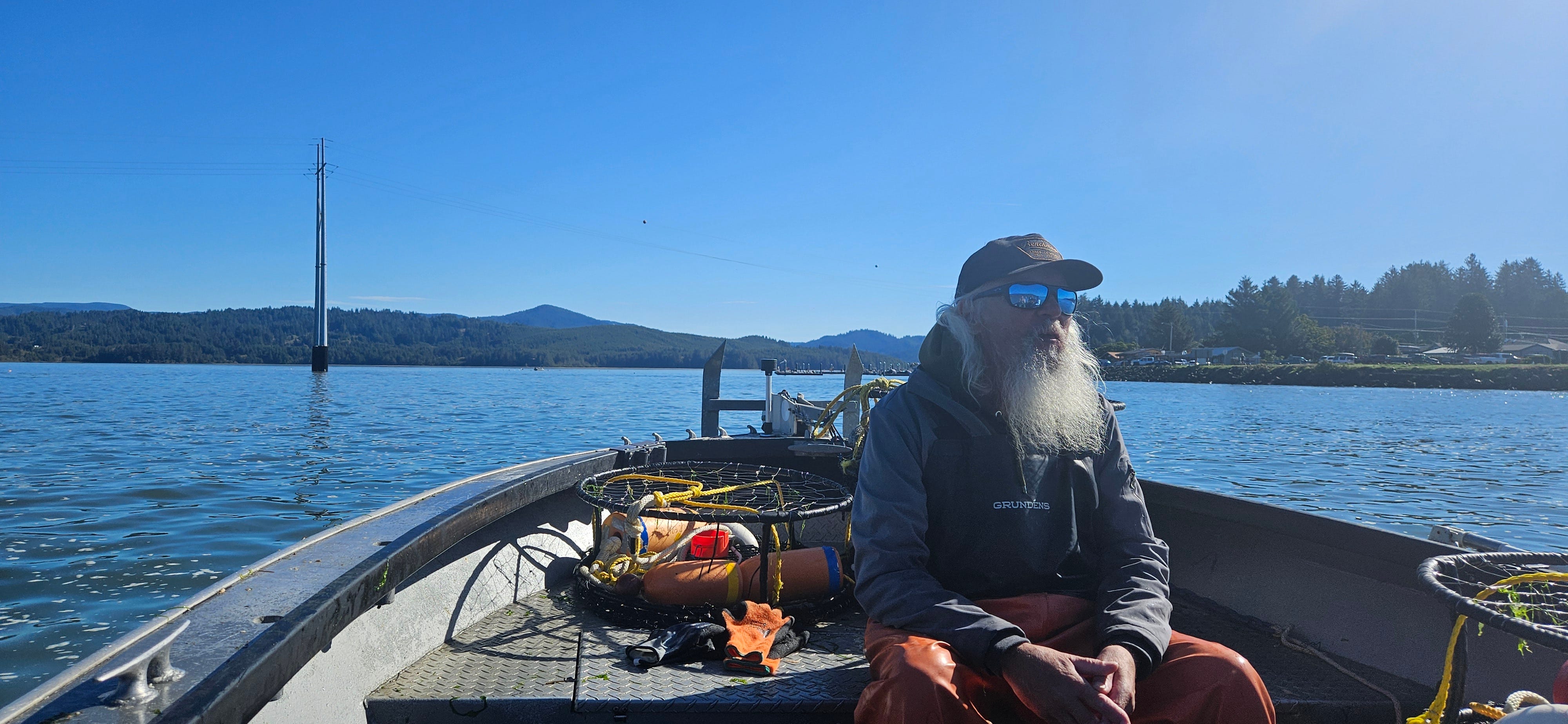
Alaska Bill.
Let’s talk about crabbing.
My understanding of crabbing was only limited to The Deadliest Catch. You have crab pots, you drop them into the water, then come back some time later. I had no idea how deep you drop them, how long you have to wait, or if you need bait. Here’s what I learned. Most crabs are shit swimmers, especially the ones in Waldport. They are Dungeness crabs and they don’t swim; therefore the crab pot must go down to the bottom for them to enter it. We had brought nine crap bots on our boat.
Note from Bill on the three types of crab pots:
1) Crab Pot-a trap that crab have to crawl into via two to four trap doors with an escape hatch for undersized crab. Effective for dropping pots and coming back at some time later. Very common to find in all crabbing applications, especially ocean crabbing and crabbing done overnight or for long soaks at a time.
2) Crab Ring- a trap with two rings, one smaller and one larger, with netting connecting the two rings and also covering the area inside the smaller ring. Hauling rope is attached to the larger ring in three spots. When deployed the crab ring lays flat on the ocean or bay floor and is set by quickly hauling up the trap off the bottom to create a basket that the crabs have a hard time getting out of if the trap is hauled very quickly. Very common in bay crabbing applications because of ease in transporting several traps and ease in hauling due to light weight.
3) Slip Ring-a crab trap (this is what we used) that was developed to take the best attributes of crab pots and crab rings and combine them. Slip rings are like crab pots in that they are a cage on all sides, bottom and top when set. Slip rings are like crab rings in that they allow crabs to crawl in the trap at any avenue they wish. They don’t have to find a trap door to get into the trap – which does take time for crabs to figure out. They are also like slip rings in that have to be lifted in order for a floating ring to create a basket. In the case of a slip ring, the basket also has a ceiling which keeps crabs from crawling out the top. Having crabs crawl out the top is the weakness of a crab ring as it is only a basket when the trap is set and anything less than a quick haul will result in big crab getting out easily by scaling the basket before it can be pulled out of the water. A slip ring negates this by having a ceiling there to trap the crab on the haul up.
I thought well this is going to be a short experience. I figured we were going to drop them in and come back in the afternoon to check our pots - I couldn’t have been more wrong. Once we dropped the last pot into the water, we circled back to the first pot we dropped and Alaska Bill pulled up to check the pot. The bait is interesting and again, I wouldn’t have guessed it. We were using raw chicken crammed into a bait box inside the pot. The other type of bait was a mason jar with delicious clam guts inside it with holes poked in the lid.
Note from Bill on the best crab bait:
Clams are a favorite food of Dungeness crab as both animals live in and near the sand. The smell of clams is sure to catch the attention of crabs better than other baits and are used by fisherman “in the know”.
Above the water, there are two buoys separated by three feet of rope. The one on the end acts as a unique identifier that signals to other people that it’s not their crab pot, and second is a generic buoy that is attached to the rope leading down to the trap. There are different ways to approach the buoys to pull up the pot, here is how Bill Taylor does it. When the boat is coming around to pull a pot up, the Captain has to position the vessel such that the person on the port side leans out with an arm out-stretched aiming for the three feet of rope in between the two buoys. The unspoken rule I observed was that you don’t want to miss the grab and have the Captain come around again. Once you grab the rope, you MUST have a firm grip and pull that rope as steady as possible or you risk the lid opening and the crab escaping. Alaska Bill had done this before so he knew what to do and had great technique. Once you pull a pot on board you have to select only male crabs of a particular size. You want to leave some crabs in the pot to keep the feeding frenzy going. Fun fact, all the crabs we eat are male. The pot is then thrown back into the sea once the Captain says so - not before. And so you cycle through each of the pots and try to throw them into a crowded area of crabs. This is crabbing. You are done crabbing when you hit a limit of 12 male Dungeness crabs per person on the vessel measuring at least five and three-quarter inches across the carapace and ahead of the ports, the tiny points on the far sides of the crab.
Whenever I am doing something for the first time, I keep quiet and observe what people are doing and how they do it. I noticed there wasn’t any small talk, definitely no Sea Shanties, to my disappointment. Captain Taylor was concentrating on maneuvering and monitoring his depth finder. Alaska Bill was breathing heavily and differentiating the males vs females and throwing them in a bucket with their bellies pointed to the sky. Another fun fact, crabs fall asleep or enter into a calmed state when placed on their backs - looks like we have that in common. After Alaska Bill pulls up a few pots, the father from the family tags him out. Let’s call the father Jeremy. He is a fishing/hunting guide up in Alaska and loves it there. He is younger than Alaska Bill and is adept at crabbing.
It’s now approaching sunrise around 0745, and it’s glorious. The sun is a welcomed sight with its light that brings life and color to the landscape. Our rough and tough crew is working hard and is steadily getting closer to our crabbing limit. As the sun rises, I am able to take in Captain Bill Taylor for the first time. He’s a tall, strong man with a robust frame, a trimmed white beard and a baseball cap. His forearms are the size of my legs and he has earned the title of Captain. His voice is coarse as though the salty sea air had left its mark and he speaks in measured words that commanded respect. He keeps quiet as he’s managing a number of things at the same time. As each bucket of crabs gets filled up at the bow it gets shuttled towards the Captain sitting at the stern with a large cooler. He measures each crab using essentially a “crab-ruler”. The ones that measure up to it get placed in the cooler, the ones that don’t get thrown over board. If he came across a big crab every now and then he would say, “Oh, you’re definitely invited to the hot tub party.” He was referring to the large vat of boiling water awaiting each crab. It was funny to hear him say it.
I had been observing up until this point and keeping quiet. Jeremy suggested his daughter pull up a few pots herself. She was eager to do so. She stood next to her dad and assisted him then pulled a few pots herself. Jeremy suggested I go up and pull some pots. I went up and started to earn those crabs. Forget about crossfit, all those people should go crabbing. It’s a full body workout. I have been the new guy in blue collar jobs before. You don’t want to make a fool of yourself or look like an asshole. I made sure not to miss my initial rope grab in between the buoys. I quickly learned you want to pull as fast as possible at the beginning to get rid of any slack in the rope while the vessel is coming around the pot. If you didn’t, you would end up doing quite a bit more work getting that pot up to the surface. Every now and then I would hear Bill from the Stern say, “Look at Antowan go!” I was making a good impression and that felt good. You have to take any complement from people that are experts in their domain. Pulling the pots up was the easy part. Parsing through the catch required some experience and for me, composure. It’s not difficult to tell males from females - see image below. The challenging part for me was to stick my bare hands into a pot full of swarming crabs that resemble MASSIVE SPIDERS without getting pinched and do it in an externally composed and confident manner so as not to look like a greenhorn in front of the crew. There were a few times where I dropped a few crabs because I was close to getting pinched, I hear it’s a natural reaction…
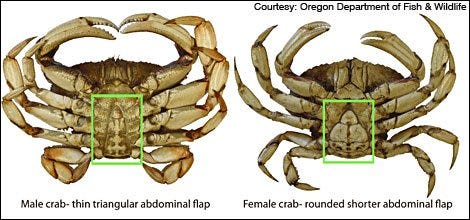
There is something that feels so damn honest about doing this work. All blue collar jobs have an immediate sense of reward to them. You see your progress right in front of you. You start with zero crab then you work to get more crab. You do the work and earn the satisfaction of reaping the rewards. It’s right in front of you the whole time. It almost feels instinctual. Catching your meal. This type of satisfaction was not present in my engineering life. You rarely made progress within a few hours. Sometimes, entire projects would get scrapped and all the work you placed into it wouldn’t come to fruition. That effort didn’t intersect with the economies of scale; thus the project got canned. There’s no bureaucratic bullshit in blue collar jobs and I fucking love that. I yearn for it. That’s what makes it so attractive to me. It makes sense. If your car is broken a mechanic fixes it. If your lawn is a mess the gardener tends to it. If you have cattle, the cowboys herd and protect them. It is straightforward, honest, and real.
Blue collar workers communicate directly. They don’t care about political correctness nor do they care about hurting your feelings. I worked as a ranch hand during my early college years. I had the owner walk up to me while I was building a fence and tell me that, “He would have put me in my place for asking too many questions about the work I was given.” There was no HR team for me to file a Jira ticket to. You learn quite a bit about yourself when you work blue collar jobs.
Back to crabbing.
It’s now 0900 and the family of three get off the boat with 36 crabs they will take to the hot tub party. While docked, two retired gentlemen from Florida get aboard. One is in his mid-70s and the other in his 80s. They take an annual trip over to Oregon and go crabbing with Bill. Time for some quick math - in total there were 9 people going crabbing that day with a limit of 12 crabs per person, our limit comes to 108 crabs. We caught 36 by 0900 and have 72 left to go. I realize I’m the main crab pot puller for the remainder of the trip and I’m determined to hit the limit.
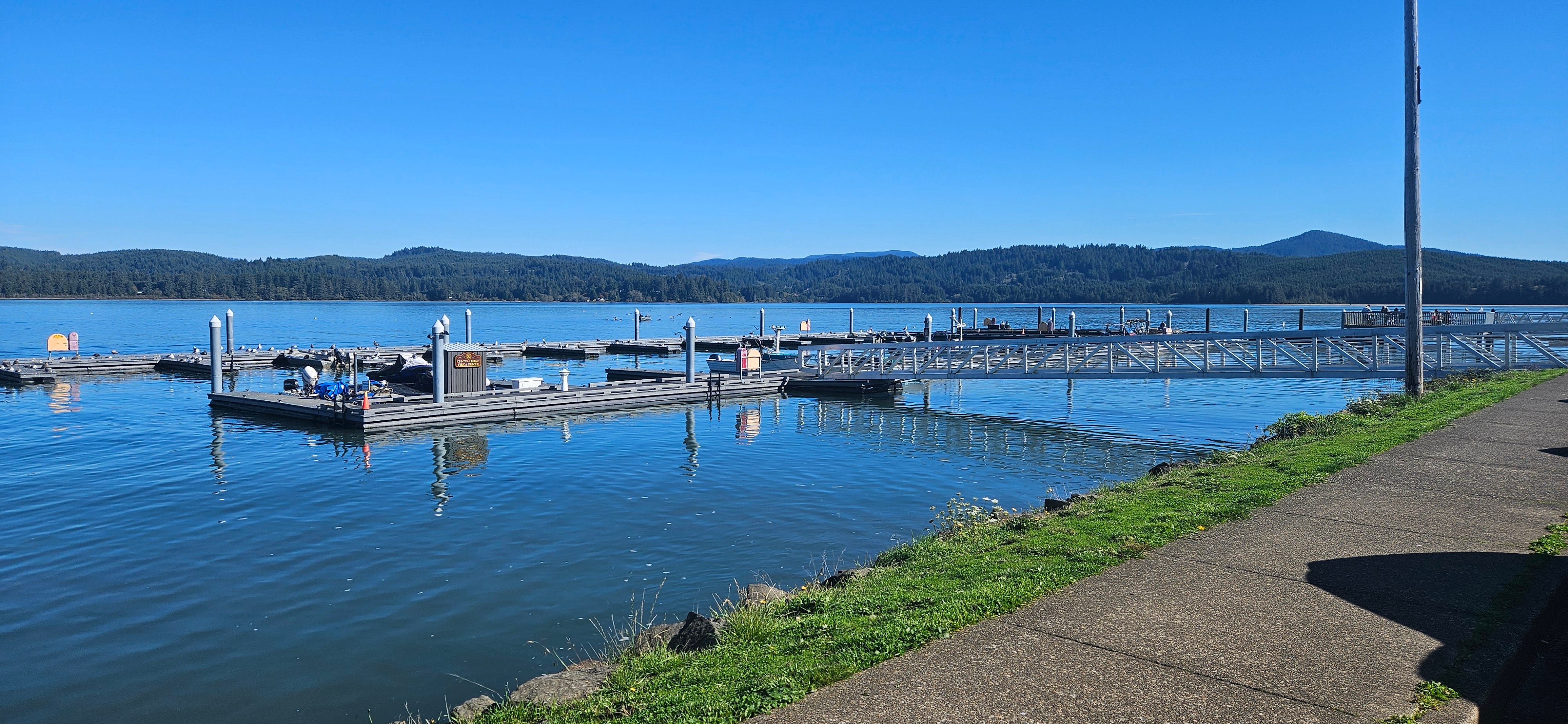
Waldport Docks
After a while of pulling, the younger of the men from Florida asks if he can tag me out. We switch and he pulls up his first pot and places it directly on the cleat (SEE PHOTO BELOW). It’s not a good idea to do that because the cleat can tear the bottom of the crab pot. This gentleman doesn’t realize this but Captain Taylor sees this from a mile away. He states, from the back of the boat, “do not put it on the cleat”. The man doesn’t hear. Bill says it again louder, “Do not put it on the cleat.” This time the man hears it but doesn’t know what he means. The Captain, with his wisdom, repeats the words on final time, “Do Not Put It On The Cleat.” The man is still confused but does his best to follow the directions. Alaska Bill jumps up and provides a helping hand. That exchange was minor yet profound for me. It was clear, direct. There was no applying the compliment sandwich approach of “you did a great job pulling the rope bud, but please try not to place the pot on this thing called the cleat because it can tear the bottom of the pot releasing all the crab and rendering this pot useless.” None of that. Bill was polite and firm in how he addressed the problem, then the gentleman understood why it wasn’t a good idea to place the pot there.
We hit our limit by 1200 and returned back to the pier. Bill instructed me to join the group at Shrimp Daddy’s Bait and Tackle Shop around the corner from the pier. Bill was kind enough to peel and clean all 108 of our crabs for us, he didn’t take any home himself. He’s a complete professional and I would highly recommend him to anyone looking for an expert fishing or crabbing guide in Oregon.
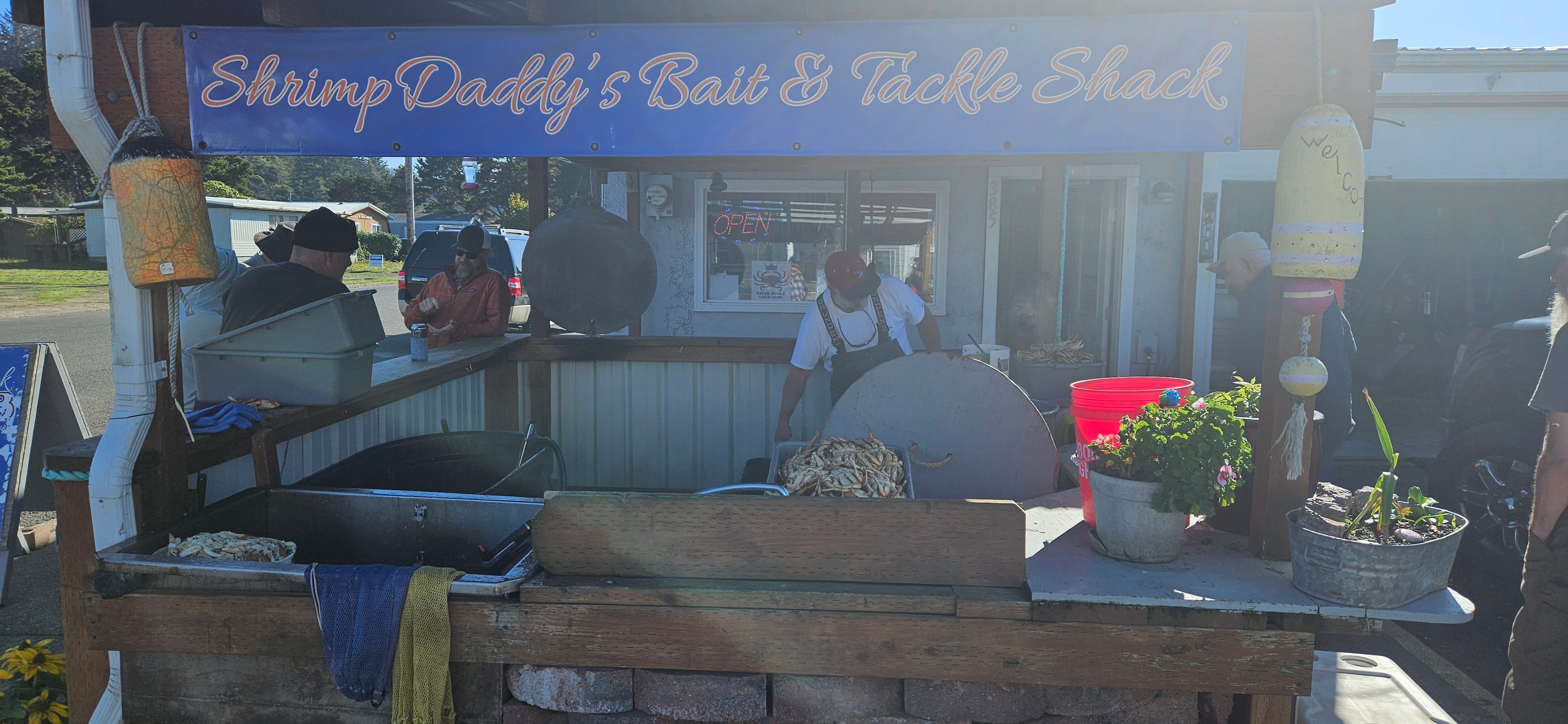
Shrimp Daddy’s Bait & Tackle Shack
It’s important to note that my fiancé gifted me a salmon fishing trip but Bill double booked me. He called and apologized and suggested I come out for free to crab. I was hesitant initially but he essentially said and I’m loosely paraphrasing, “listen, kid, I just offered to take you crabbing for free. Take the opportunity to go crabbing and share the story with your family.”
I took the crab and here was the story.
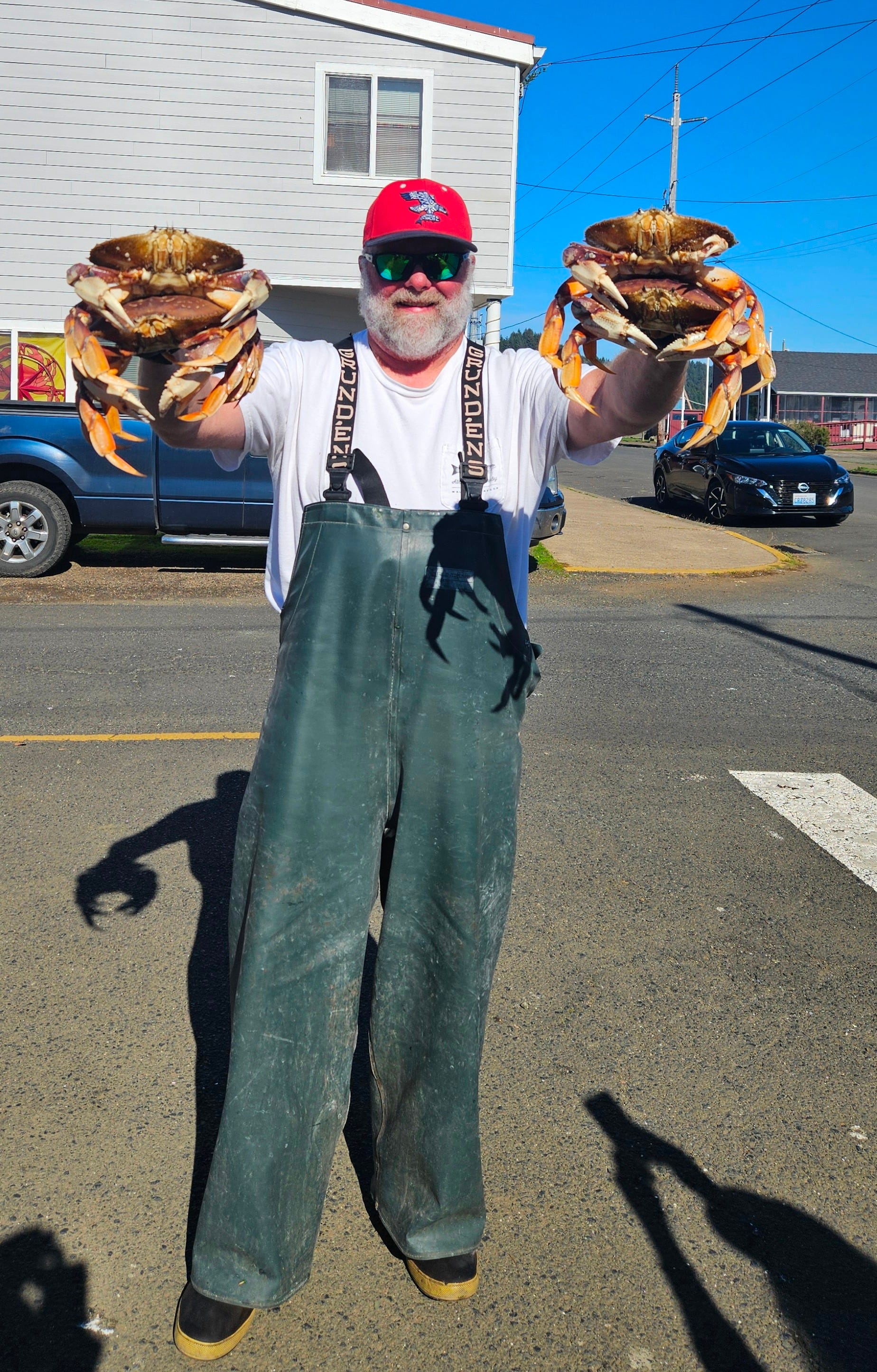
Captain Bill Taylor.
https://ospreyguideadventures.com/
ospreyguideadventures@gmail.com
Thank you to Bill Taylor for teaching me how to crab and his invaluable edits to this story. I can’t recommend his guided trips enough. You will learn a new skill and have your own story to tell.